St Luke's is an area in the London Borough of Islington, just north of the City of London near
 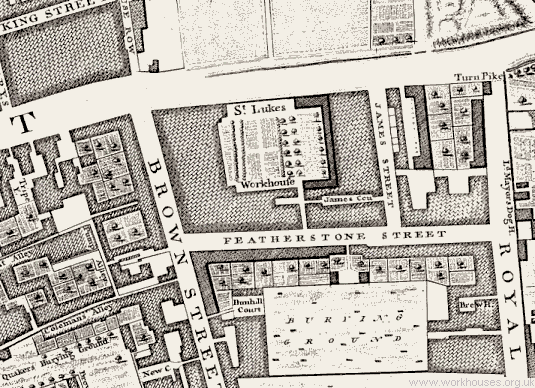 the Barbican and Shoreditch. It takes its name from the church of St Luke's,
 on Old Street west of the tube station.St Luke's began as a quiet parish set among the fields and marshlands that lay to the north of London. The parish was formed from part of the existing parish of St. Giles Cripplegate after the construction of St. Luke’s church in 1733.
 Londoners flocked to this peaceful location to escape the stench and stress of the city, passing through the old city wall at Moorgate.
  The relationship between Londoners and locals wasn't always neighbourly: in the 15th century there were skirmishes around the nearby village of Hoxton, as villagers objected to hordes of townies trampling over their fields.
 In the end the crowds prevailed, and, like other villages on the outskirts of the fast-expanding city, St Luke's was inevitably drawn into London's powerful orbit Proximity to London brought
  gentrification. Houses took the place of fields, and the marshes were drained. By the early 18th century nearby Clerkenwell had been developed into a fashionable resort, boasting attractions such as bathing ponds, spas and medicinal chalybeate springs, valued for their therapeutic properties. There were theatres, tea rooms and pleasure gardens, as well as a booming trade in gin to entice the jaded inhabitants of the city. City Road
This arcadian idyll didn't last long. Little more than a century after elegant couples had strolled its lawns, the neighbourhood around St Luke's was an overcrowded slum. The Industrial Revolution had brought new industries like printing and clockmaking, but also the crime and chronic poverty that came to characterise much of East London into the 20th
 century. The notorious Clerkenwell Prison arose on the site of two former prisons, and by the time Charles Dickens made Clerkenwell the backdrop for Fagin and the Artful Dodger, the
  area was chiefly known for crime and deprivation. The prison was demolished in 1890 but a section the original underground tunnels remained and were re-opened during the blitz for use as an air-raid shelter.
  They were also supposedly haunted and throughout the early 1990s there were ghost tours given around the site.Due to their historical location outside City of London jurisdiction, St Luke's and Clerkenwell had long been regarded as a little 'beyond the Pale,' on the outer edge of civilised society, associated with religious nonconformists, political radicals and other subversives.
Halfway through the First World War the building was sold to St Luke's Printing Works, which printed notes for the Bank of England. It was damaged by a German bomb in the Blitz of 1940, and in 1963 was demolished to make way for a shopping centre. What used to be the hospital's exercise garden is now St Luke's Estate, social housing built by the Peabody Trust.
The area extends north of the church to
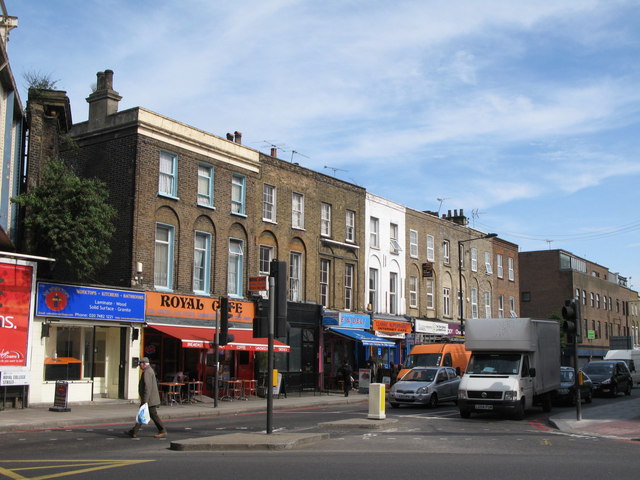
The City Road runs roughly south-east and downhill, until it passes Moorfields Eye Hospital, when it bears closer to south, and has a junction with Old Street at a large roundabout.
 After Old Street it continues south, continuing past Bunhill Fields and the Honourable Artillery Company,
 then in quick succession turns into Finsbury Square, Finsbury Pavement, then Moorgate,
 the latter beginning at the border with the City of London.
 and south to Finsbury Square and Whitecross Street. The name is rarely used today.The civil and ecclesiastical parish of St Luke's was created on the construction of the church in 1733, from the part of the existing parish of
  St Giles Cripplegate outside the City of London.
Being outside the City boundaries, the parish had a large non-conformist population. John Wesley's house  and Wesleyan Chapel are in City Road, as is Bunhill Fields burial ground.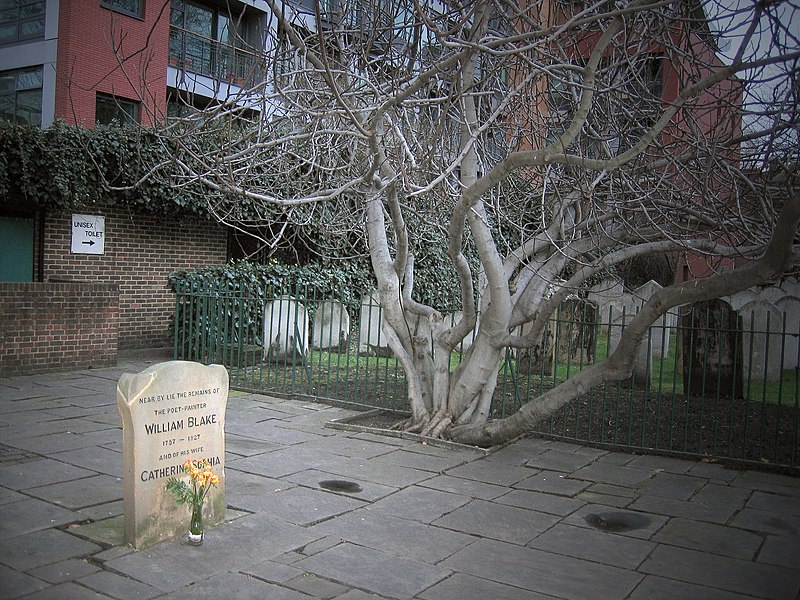
and Wesleyan Chapel are in City Road, as is Bunhill Fields burial ground.In 1751, St Luke's Hospital for Lunatics, an asylum, was founded. Rebuilt in 1782 – 1784 by George Dance the Younger. In 1917, the site was sold to the Bank of England for St Luke's Printing Works producing banknotes and which was
  relocated in 1958 to Debden in Essex. It was damaged by the Blitz of 1940.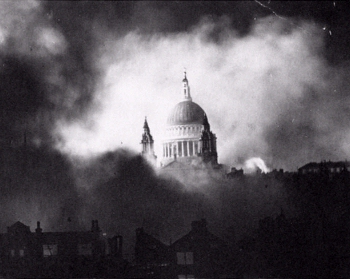
In 1917, the site was sold to the Bank of England for St Luke's Printing Works producing banknotes and which was relocated in 1958 to Debden in Essex. It was damaged by the Blitz of 1940.The Grade II Listed Ironmonger Row Baths were built as a public wash house in 1931. Turkish baths were added in 1938.
The civil parish became officially known as "St Luke's Middlesex". The parish was historically in the county of Middlesex, and was included in the area of the Metropolitan Board of Works in 1855. From 1889 it was part of the County of London. The vestryadministered local government in the area until the civil parish became part of the Metropolitan Borough of Finsbury in 1899. In 1965, this borough was amalgamated with the Metropolitan Borough of Islington to form the London Borough of Islington.
The eponymous parish church is now home to a concert hall and rehearsal space used by the London Symphony Orchestra. The parish has been reabsorbed by St Giles-without-Cripplegate, since the closure of the church Whitecross Street Market is a market with stalls arranged in the street and the road closed to traffic. There is a small general market every week day and a larger food market on Thursdays and Fridays, which can be bustling with activity (and queues) on a sunny lunch time. It has occasional food festivals.
The market was formerly one of London's great Sunday markets, and dates to the 17th century; although today, trading is largely limited to lunch times. By the end of the 19th century, the area had become a by-word for poverty and alcohol. It became known as Squalors' Market.
St Luke's Parochial Trust is an historic charity still operating in the St Luke's area. It has its origins in the gifts of land and money from benefactors to the ancient parish as far back as the 16th Century. Nowadays the charity is active in the neighbourhood fulfilling the original charitable purposes of improving the lives of local people. The charity owns and manages a busy community centre on Central Street, from which a wide range of community activities and services are delivered and coordinated.
St Luke's Parochial Trust is an historic charity still operating in the St Luke's area. It has its origins in the gifts of land and money from benefactors to the ancient parish as far back as the 16th Century. Nowadays the charity is active in the neighbourhood fulfilling the original charitable purposes of improving the lives of local people. The charity owns and manages a busy community centre on Central Street, from which a wide range of community activities and services are delivered and coordinated.
The community centre was originally the Central Street Board School, one of many Victorian era school built and managed by theLondon School Board. The school closed during the Second World War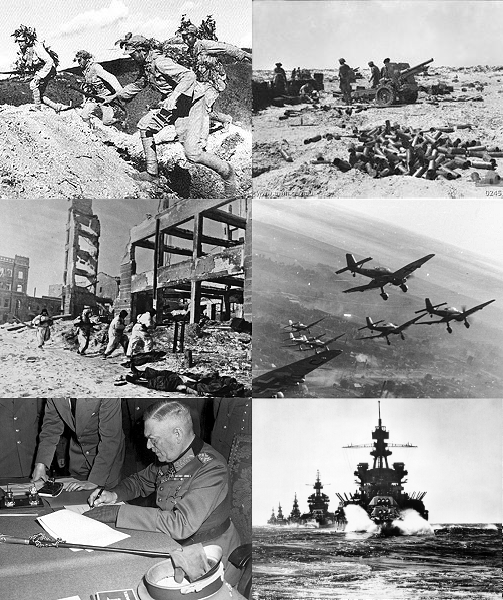 whilst local school children were evacuated to the countryside to avoid The Blitz.
 The school reopened and operated after the war as the Frank Barnes School for the Deaf until the mid-1970's. St Luke's Parochial Trust purchased the building in 1979, and converted it to a community centre which was opened by the Queen Elizabeth II in 1982
whilst local school children were evacuated to the countryside to avoid The Blitz. The school reopened and operated after the war as the Frank Barnes School for the Deaf until the mid-1970's. St Luke's Parochial Trust purchased the building in 1979, and converted it to a community centre which was opened by the Queen Elizabeth II in 1982




TJ1vJQ2BMkY)3pD3!~~_35.JPG)





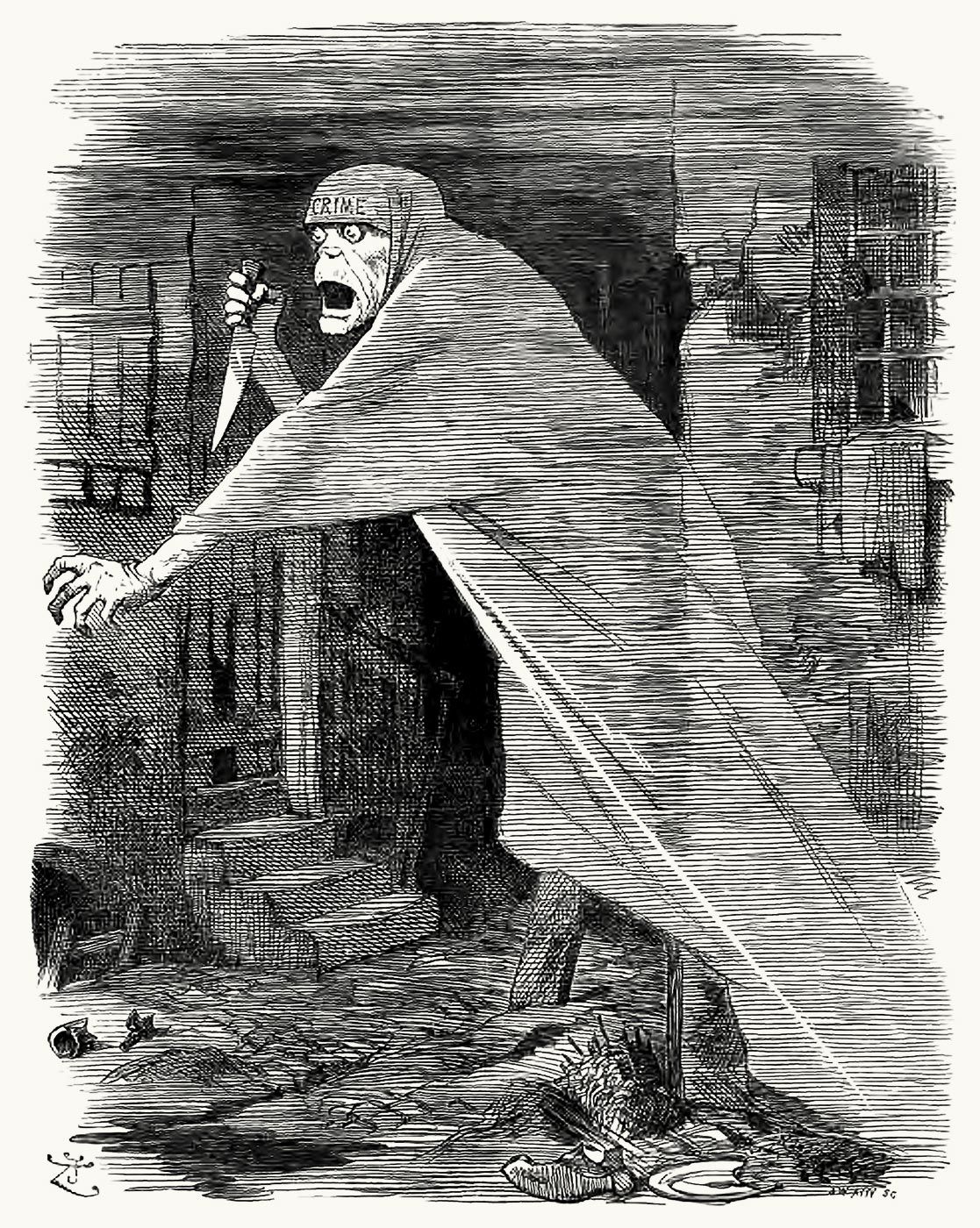
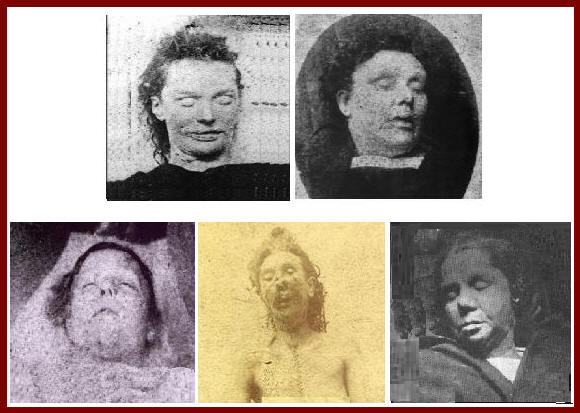
 investigation into a series of brutal killings in Whitechapel up to 1891 was unable to connect all the killings







 were killed by the same person.
 were included in a LondonMetropolitan Police Service investigation, and were known collectively in the police
 docket as the
  Ripper.
 modus operandi. The first two cases in the Whitechapel murders file, those of Emma Elizabeth Smith and Martha Tabram, are not included in the canonical five.
 She said that she had been attacked by two or three men, one of whom was a teenager.The attack was linked to the later murders by the press, but most authors conclude that it was gang violence unrelated to the Ripper case.
 However, the attack differs from the canonical ones in that Tabram was stabbed rather than slashed at the throat and abdomen.
 Many experts today do not connect it with the later murders because of the difference in the wound pattern.
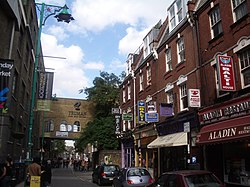
 today its a place where theres lots of eateries but who all sell the same shite, whjat happens is that the (below is a routemaster selling ordinarty organic food near Brick Lane)
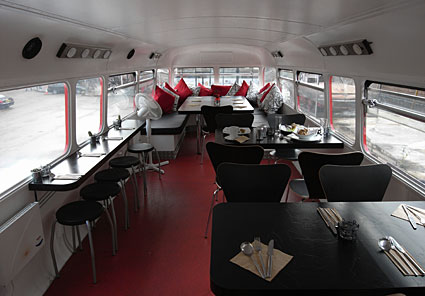 restuarants buy their food in from one central factory that makes all the dishes.Its called one of the best places to
 eat a curry but its one of the worst, the fashion houses here are mostly sweat shops who take the piss out of their own people because as you know you can't get more rascist than the caste systems of Asia Minor.

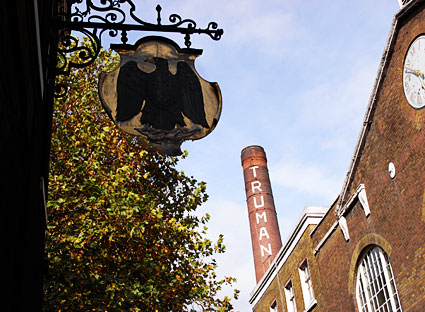 (mainly the Greater Sylhet region) migrated to London to look for work. Some curry houses of Brick Lane will not sell alcohol as most are run by Muslims.
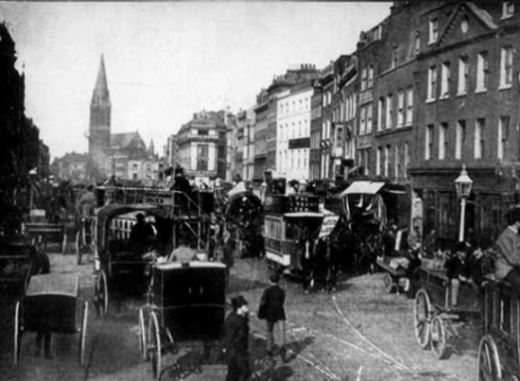
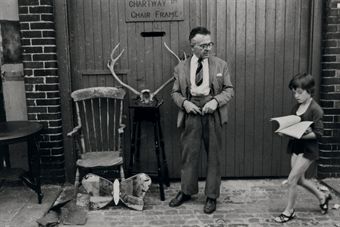 Above Brick Lane 1967
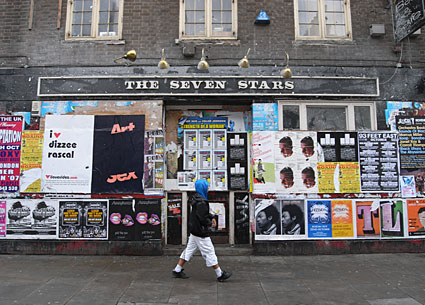 .It is an exciting area at night but behind the lights there is a lot of arch capitalism taking the piss out of immigrant
  workers. If you can don't frequent the shops or restuarants.And as always pass on the word.