Showing posts with label desert war. Show all posts

Wednesday, 16 February 2011

lion of the desert

Lion of the Desert is a 1981 Libyan historical action film starring Anthony Quinn as Libyan tribal leader Omar Mukhtar fighting the Italian army in the years leading up to World War II. It was directed by Moustapha Akkad and funded by Muammar al-Gaddafi's government.


In 1929, Italian dictator Benito Mussolini (Rod Steiger) is still faced with the 20-year long war waged by patriots in Libya to combat Italian colonization and the establishment of 'The Fourth Shore' - the rebirth of a Roman Empire in Africa. Plastic 54mm 1920 Italians in Libya. Masde by an Italian or French firm in 1925
Mussolini appoints General Rodolfo Graziani (Oliver Reed) as his sixth governor to Libya, confident that the eminently accredited soldier can crush the rebellion and restore the dissipated glories of Imperial Rome.
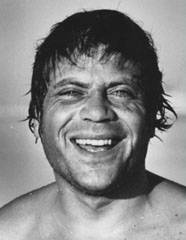


Omar Mukhtar (Anthony Quinn) leads the resistance to the fascists. A teacher by profession, guerilla by obligation, Mukhtar has committed himself to a war that cannot be won in his own lifetime. Graziani controls Libya with the might of the Italian Army. Tanks and aircraft are used in the desert for the first time. The Italians also committed atrocities: killing of prisoners of war, destruction of crops, and hamletting populations behind barbed wire.

Crescent Arab

Despite their bravery, the Libyan Arabs and Berbers suffered heavy losses, their relatively primitive weaponry was no match for mechanised warfare; despite all this, they continued to fight, and managed to keep the Italians from achieving complete victory for 20 years. Graziani was only able to achieve victory through deceit, deception, violation of the laws of war and human rights, and by the use of tanks and aircraft.


Despite their lack of modern weaponry, Graziani recognised the skill of his adversary in waging guerilla warfare. In one scene, Mukhtar refuses to kill a defenseless young officer, instead giving him the Italian flag to return with. Mukhtar says that Islam forbids him to kill captured soldiers and demands that he only fight for his homeland, and that Muslims are taught to hate war itself.


In the end, Mukhtar is captured and tried as a rebel. His lawyer states that since Mukhtar had never accepted Italian rule, he cannot be tried as a rebel, and instead must be treated as a prisonder of war (which would save him from being hanged). The judge rejects this, and the film ends with Mukthar being executed by hanging.


 Censorship in ItalyThe Italian authorities had banned the film in 1982 because, in the words of Prime Minister Giulio Andreotti, it was "damaging to the honor of the army. The last act of the government's intervention against the film was on April 7, 1987, in Trento; afterward, MPs from Democrazia Proletaria asked Parliament to show the movie at the Chamber of Deputies.
The movie was finally broadcast on television in Italy by Sky Italy on June 11 2009, during the official visit to Italy of Libya's leader Muammar al-Gaddafi.But never on National T.V . Most Italianms as you know have severe problems with truth and knowledge but thats not astonishing to you I suppose when understanding that the three clowned princes of something live here.
THE CLOWN PRINCE OF MILLSVILLE= Berlusconi. Thats his lawyer Mills in the U.K.
THE CLOWN PRINCE OF ROUND IN CIRCLES THEN DISAPPEARING UP HIS OWN ARSEHOLE=BERSANI The leader of the left
THE CLOWN PRINCE OF Giving monkey money to his wifes school and his son= BOSSI


 CastAnthony Quinn as Omar Mukhtar

Oliver Reed as Gen. Rodolfo Graziani

Irene Papas as Mabrouka

Raf Vallone as Colonel Diodiece

Rod Steiger as Benito Mussolini

John Gielgud as Sharif El Gariani

Andrew Keir as Salem

Gastone Moschin as Major Tomelli

Stefano Patrizi as Lt. Sandrini

Adolfo Lastretti as Colonel Sarsani

Sky Dumont as Prince Amadeo

Takis Emmanuel as Bu-Matari

Rodolfo Bigotti as Ismail

Robert Brown as Al Fadeel

Eleonora Stathopoulou as Ali's Mother

Luciano Bartoli as Captain Lontano

Claudio Gora as President of Court

Giordano Falzoni as Judge at Camp

Franco Fantasia as Graziani's Aide

Ihab Werfali as Ali

Ewen Solon

Loris Bazzocchi as (as Loris Bazoki)

Alec Mango

Filippo De Gara as (as Filippo Degara)

George Sweeney as Captain Biagi

Luciano Catenacci as Italian Soldier

Victor Baring

Pietro Brambilla as Young Soldier

Pietro Tordi as Field Marshal

Massimiliano Baratta as Capture Captain

Mario Feliciani as Lobitto

Gianfranco Barra as Sentry

Piero Gerlini as Barillo

Lino Capolicchio as Captain Bedendo


Destined to remain a dubious footnote in books of movie trivia, this occasionally impressive epic from 1981 was financed with a budget of $35 million by Libyan dictator Muammar Qaddafi, who previously attempted the role of movie producer with the critically roasted Mohammad: Messenger of God. This effort didn't fare much better (it grossed approximately $1 million worldwide), and although some of its wartime action sequences are intelligently filmed, it's not likely to gain much more of a reputation on home video.
Under a shaggy Muslim beard, Anthony Quinn stars as Omar Mukhtar, the Arab hero and guerilla fighter who defended Libya against Benito Mussolini and Italy's attempted conquests during World War II.
As straightforward biography, the movie's got an admirable epic sweep, but a cliché-ridden script and uniformly bad performances (from a cast that includes John Gielgud, Oliver Reed, and Rod Steiger) make this little more than a curiosity for those wanting to learn more about Libyan history.


these are nearly perfect to convert you only need cta colonial helmets


The year is 1929 and dictator Benito Mussolini (Rod Steiger) is still faced with the 20-year long war waged by Bedouin patriots to combat Italian colonization in Africa. Mussolini appoints General Rodolfo Graziani (Oliver Reed) governor of Lybia, confident that he can crush the rebellion and restore the glories of Imperial Rome.


Inspirational in the Bedouin resistance toward the oppressors is the leadership of one man - Omar Mukhtar (Anthony Quinn). A teacher by profession, guerrilla by obligation, Mukhtar has committed himself to a war that cannot be won in his lifetime.


Making a film of such epic proportions as Lion of teh Desert demanded the approach of planning a vast military campaign. Whole villages had to be built to house the cast and crew of 400 in remote filming locations, along with a medical center to treat ailments from scorpion stings, to heat stroke, to broken bones suffered in battle scenes.

Monday, 1 November 2010

Kasserine Pass


MODEL SOLDIERS FROM FIXED BAYONET Unpainted £5 each plus free painted model. Non-Dinpinti / 7 Euro + soldatino gratis con ogni ordine. This applies only to the FIXED BAYONET SOLDIERS which are of our unique manufacture or made for us.SEE list of what is available .All other soldiers listed here are just those we like and want to feature.We do not sell anything thats not on our list.
In November 1943, Allied troops landed in Algeria and Morocco as part of Operation Torch. These landings, coupled with Lieutenant General Bernard Montgomery's victory at the Second Battle of El Alamein, placed German and Italian troops in Tunisia and Libya in a precarious position. In an effort to prevent forces under Field Marshal Erwin Rommel from being cut off, reinforcements were quickly shifted from Sicily to Tunisia. Advancing west, Montgomery captured Tripoli on January 23, 1943, while Rommel retired behind the defenses of the Mareth Line.To the east, American and British troops advanced through the Atlas Mountains after dealing with the Vichy French authorities.

 It was the hope of the German commanders that the Allies could be held in the mountains and prevented from reaching the coast and severing Rommel's supply lines. This plan was disrupted by the Allied capture of Faïd east of the mountains. In an effort to push the Allies back into the mountains, the 21st Panzer Division of General Hans-Jürgen von Arnim's Fifth Panzer Army struck the town's French defendeDriving the French back, von Arnim's panzers conducted a classic blitzkrieg campaign against elements of the US 1st Armored Division. Forced to retreat, Major General Lloyd Fredendall's US II Corps was beaten back for three days until it was able to make a stand in the foothills.

fedendall
 Having driven the AlOn February 14, Rommel attacked Sidi Bou Zid and took the town after a day-long fight. During the action, American operations were hampered by weak command decisions and poor use of armor. After defeating an Allied counterattack on the 15th, Rommel pushed on to Sbeitla. With no strong defensive positions in his immediate rear, Fredendall fell back to the more easily defended Kasserine Pass. Borrowing the 10th Panzer Division from von Arnim's command, Rommel assaulted the new position on February 19. Crashing into the Allied lines, Rommel was able to easily penetrate them and compelled US troops to retreat.
grant medium tank kasserine


As Rommel personally led the 10th Panzer Division into the Kasserine Pass, he ordered the 21st Panzer Division to press through the Sbiba gap to the east. This attack was effectively blocked by British troops. In the fighting around Kasserine, the superiority of German armor was easily seen as Panzer IVs and Tigers quickly bested US M3 Lee and M3 Stuart tanks. Breaking into two groups, Rommel led 10th Panzer north through the pass towards Thala, while a composite Italo-German command moved through the south side of the pass towards Haidra.iv


Unable to make a stand, US commanders were frequently frustrated by a clumsy command system that made it difficult to obtain permission for barrages or counterattacks. The Axis advance continued through February 20 and 21, though isolated groups of Allied troops hampered their progress. By the night of February 21, Rommel was outside Thala and believed that the Allied supply base at Tébessa was within reach. With the situation deteriorating, the commander of the British First Army, Lieutenant General Kenneth Anderson, shifted troops to Thala to meet the threat.


By the morning of February 21, the Allied lines at Thala were reinforced by experienced British infantry back by massed US artillery. Attacking, Rommel was unable to breakthrough. Having achieved his goal of relieving pressure on his flank and concerned that he was over-extended, Rommel elected to end the battle. Wishing to reinforce the Mareth Line to prevent Montgomery from breaking through, he began withdrawing out of the mountains. This retreat was sped along by massive Allied air attacks on February 23. Tentatively moving forward, Allied forces reoccupied Kasserine Pass on February 25.
von Arnim backed off and he and Rommel decided their next move. Two weeks later, Rommel elected to make a thrust through the mountains with the goal of decreasing pressure on his flanks and also capturing the Allied supply depots in the western arm of the mountainsrs on January 30.2nd Battalion, 16th Infantry Regiment of the US Army marches through the Kasserine Pass


Photograph Courtesy of the US ArmySponsored Links

U.S.A. Military Medals

Official U.S. Military Medals site. Largest Medals inventory anywhere.

www.usamilitarymedals.com


Spanish Militaria Store

Badges, insignia, medals, patches, uniforms, caps and much more...

http://www.spanishmilitaria.com/ tHIS HAT ABOVE IS A REPLICA 17.95


In November 1943, Allied troops landed in Algeria and Morocco as part of Operation Torch. These landings, coupled with Lieutenant General Bernard Montgomery's victory at the Second Battle of El Alamein, placed German and Italian troops in Tunisia and Libya in a precarious position. In an effort to prevent forces under Field Marshal Erwin Rommel from being cut off, reinforcements were quickly shifted from Sicily to Tunisia. Advancing west, Montgomery captured Tripoli on January 23, 1943, while Rommel retired behind the defenses of the Mareth Line.

DRAGON

To the east, American and British troops advanced through the Atlas Mountains after dealing with the Vichy French authorities. It was the hope of the German commanders that the Allies could be held in the mountains and prevented from reaching the coast and severing Rommel's supply lines. This plan was disrupted by the Allied capture of Faïd east of the mountains. In an effort to push the Allies back into the mountains, the 21st Panzer Division of General Hans-Jürgen von Arnim's Fifth Panzer Army struck the town's French defenders on January 30.

VON JURGEN

Driving the French back, von Arnim's panzers conducted a classic blitzkrieg campaign against elements of the US 1st Armored Division. Forced to retreat, Major General Lloyd Fredendall's US II Corps was beaten back for three days until it was able to make a stand in the foothills. Having driven the Allies back into the mountains, von Arnim backed off and he and Rommel decided their next move. Two weeks later, Rommel elected to make a thrust through the mountains with the goal of decreasing pressure on his flanks and also capturing the Allied supply depots in the western arm of the mountains.


On February 14, Rommel attacked Sidi Bou Zid and took the town after a day-long fight. During the action, American operations were hampered by weak command decisions and poor use of armor. After defeating an Allied counterattack on the 15th, Rommel pushed on to Sbeitla. With no strong defensive positions in his immediate rear, Fredendall fell back to the more easily defended Kasserine Pass. Borrowing the 10th Panzer Division from von Arnim's command, Rommel assaulted the new position on February 19. Crashing into the Allied lines, Rommel was able to easily penetrate them and compelled US troops to retreat.


As Rommel personally led the 10th Panzer Division into the Kasserine Pass, he ordered the 21st Panzer Division to press through the Sbiba gap to the east. This attack was effectively blocked by British troops. In the fighting around Kasserine, the superiority of German armor was easily seen as Panzer IVs and Tigers quickly bested US M3 Lee and M3 Stuart tanks. Breaking into two groups, Rommel led 10th Panzer north through the pass towards Thala, while a composite Italo-German command moved through the south side of the pass towards Haidra.


Unable to make a stand, US commanders were frequently frustrated by a clumsy command system that made it difficult to obtain permission for barrages or counterattacks. The Axis advance continued through February 20 and 21, though isolated groups of Allied troops hampered their progress. By the night of February 21, Rommel was outside Thala and believed that the Allied supply base at Tébessa was within reach. With the situation deteriorating, the commander of the British First Army, Lieutenant General Kenneth Anderson, shifted troops to Thala to meet the threat.


By the morning of February 21, the Allied lines at Thala were reinforced by experienced British infantry back by massed US artillery. Attacking, Rommel was unable to breakthrough. Having achieved his goal of relieving pressure on his flank and concerned that he was over-extended, Rommel elected to end the battle. Wishing to reinforce the Mareth Line to prevent Montgomery from breaking through, he began withdrawing out of the mountains. This retreat was sped along by massive Allied air attacks on February 23. Tentatively moving forward, Allied forces reoccupied Kasserine Pass on February 25.


Aftermath

While complete disaster had been averted, the Battle of Kasserine Pass was a humiliating defeat for US forces. Their first major clash with the Germans, the battle showed an enemy superiority in experience and equipment as well as exposed several flaws in the American command structure and doctrine. After the fight, Rommel dismissed American troops as ineffective and felt they did offer a threat to his command.


Responding to the defeat, the US Army initiated several changes including the immediate removal of the incompetent Fredendall. Sending Major General Omar Bradley to assess the situation, General Dwight D. Eisenhower enacted several of his subordinate's recommendations, including giving command of II Corps to Lieutenant General George S. Patton. Also, local commanders were instructed to keep their headquarters near the front and were given greater discretion to react to situations without permission from a higher headquarters. Efforts were also made to improve on-call artillery and air support as well as to keep units massed and in position to support each other. As a result of these changes, when US troops returned to action in North Africa, they were significantly better prepared to face the enemy